Evaluating the 3D Octagonal Stop Sign Box for Custom Projects
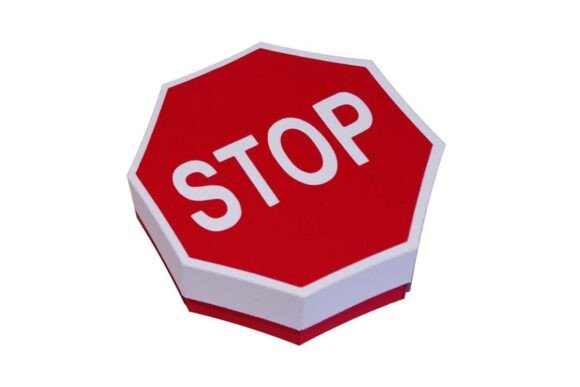
The 3D Octagonal Stop Sign Box represents a specific category of craft and modeling materials designed to replicate the iconic geometry of traffic signage. Unlike flat, two-dimensional representations found in standard printing or basic crafting kits, this design offers depth and structural integrity through a multi-part assembly process. It is engineered as a three-dimensional object that can be scaled, cut, and assembled to fit various project requirements. For hobbyists, educators, and model makers, understanding the mechanics and applications of this box design is essential before committing to a purchase or production run.
Understanding the Design Structure
The core utility of the 3D Octagonal Stop Sign Box lies in its modular construction. The design is not a single monolithic piece but rather a system composed of distinct components that come together to form the final shape. Specifically, the design comes in two primary pieces: the box base and the LED component, plus the topper piece. This separation allows for flexibility during the manufacturing or assembly phase, enabling users to customize lighting placement or internal volume without compromising the external aesthetic.
The physical creation of the box relies on precise engineering of the template. Users are provided with a layout where they can re-size and cut the design in any size you wish. This scalability is a critical feature for those working on projects ranging from miniature dioramas to large-scale educational displays. Once the desired dimensions are established, the assembly process involves folding along the perforated lines. These pre-scored lines ensure clean bends and accurate angles, which are vital for maintaining the octagonal symmetry required for a realistic stop sign appearance.
Securing the structure requires attention to detail. To assemble the unit, one must glue each part with its neighbor, ensuring that the seams align perfectly. Finally, the two edges must be secured with glue to close the loop of the octagon. This method creates a sturdy container capable of holding small items or housing the LED elements mentioned in the design specifications. The result is a robust, three-dimensional object that mimics the visual weight and presence of a real road sign.
Reasons for Interest and Application Scenarios
Individuals often seek out a 3D Octagonal Stop Sign Box for specific functional or aesthetic reasons. One primary driver is the need for realistic props in educational settings. Teachers and safety instructors may require tangible models to demonstrate traffic rules to young children. A flat image lacks the spatial awareness that a 3D model provides; a physical box allows students to view the sign from multiple angles, enhancing their understanding of how drivers perceive these signals.
Another significant use case is in model railroading and architectural dioramas. Enthusiasts in these fields demand high levels of detail to create immersive environments. Standard plastic or wooden blocks often lack the specific geometric precision of an octagon. The ability to resize the design ensures that the sign fits the scale of the model train track or the building facade accurately. Furthermore, the inclusion of an LED component suggests that illumination is a key factor. Lighted signs add a dynamic element to night scenes or interactive displays, making them highly desirable for museum exhibits or detailed hobby collections.
Event planners and set designers also find value in this product. Creating a temporary urban scene for a film shoot, a stage play, or a themed party requires props that look authentic but are lightweight and easy to transport. The paper or cardstock nature of the box makes it significantly lighter than metal or heavy plastic alternatives, while the assembly process allows for quick setup and breakdown.
Benefits, Tradeoffs, and Considerations
When evaluating whether to proceed with this project, it is necessary to weigh the benefits against potential tradeoffs. The most prominent benefit is the cost-effectiveness of the material. Producing a custom-sized, illuminated sign using this template is generally far less expensive than commissioning a custom-molded plastic or metal replica. Additionally, the customization capability allows for unique sizing that off-the-shelf products cannot offer. If a project requires a stop sign that is exactly 15 centimeters wide rather than the standard 20, the template approach solves this problem immediately.
However, there are tradeoffs regarding durability and longevity. Because the structure relies on glue and folded edges, it is inherently less durable than rigid manufactured goods. In high-traffic environments or outdoor settings, exposure to moisture or rough handling could compromise the adhesive bonds or warp the material. Users must consider the environment in which the box will reside. If the application requires long-term outdoor exposure, additional sealing or protective coating would be necessary, adding time and cost to the project.
Time investment is another consideration. While the concept is simple, achieving a professional finish requires patience. Folding along perforated lines must be done carefully to avoid tearing, and gluing each part with its neighbor demands precision to prevent misalignment. If the edges are not secured with glue properly, the octagonal shape may become distorted, ruining the visual effect. Therefore, this solution is best suited for individuals who enjoy hands-on assembly and have the time to dedicate to a meticulous build process.
Decision-Making Insights
Determining if the 3D Octagonal Stop Sign Box aligns with your goals requires a clear assessment of your priorities. If your primary objective is realism within a controlled indoor environment, such as a classroom, a model display case, or a studio set, this option is a strong fit. The combination of scalable geometry and integrated lighting capabilities offers a level of customization that mass-produced items cannot match. The ability to re-size and cut the design in any size you wish provides the flexibility needed for diverse creative projects.
Conversely, if your needs involve permanent outdoor installation, high-traffic public interaction, or a requirement for zero-maintenance durability, alternatives may be worth considering. In these scenarios, a molded resin, aluminum, or heavy-duty plastic sign would likely serve better, despite the higher initial cost. The assembly process, which involves folding along perforated lines and securing edges with glue, introduces variables that could fail under harsh conditions over time.
Furthermore, consider the technical skill required. If the user is looking for a "plug-and-play" solution with no assembly involved, this kit might present a steeper learning curve than anticipated. Success depends on the careful execution of the assembly steps: gluing each part with its neighbor and ensuring the structural integrity of the base, LED, and topper piece.
Conclusion
The 3D Octagonal Stop Sign Box serves as a versatile tool for creators who prioritize customization, cost-efficiency, and visual accuracy in their projects. By offering a modular design that includes a box base, LED integration, and a topper piece, it bridges the gap between simple paper crafts and complex 3D modeling. While it requires manual assembly and careful handling, the ability to tailor the dimensions and incorporate lighting makes it a compelling choice for educational, modeling, and theatrical applications.
For those interested in expanding their repertoire of similar items, exploring other options in the creator's portfolio can provide further insights. There are more road sign boxes available that utilize similar construction principles, allowing for the creation of comprehensive street scenes or traffic management simulations. Ultimately, the decision to use this design should rest on the specific environmental constraints and the desired level of interactivity within the project. By understanding the assembly requirements and the limitations of the materials, users can effectively determine if this solution meets their unique needs.