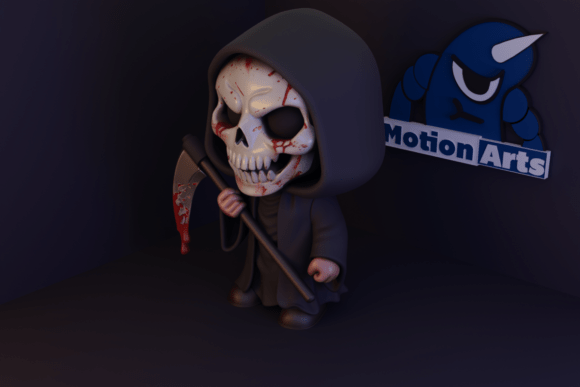
Sculpted Skull 3D Model for Printing
In the realm of additive manufacturing, few subjects offer as much creative potential as anatomical forms. A Skull 3D Model for Printing serves as a foundational asset for makers ranging from hobbyists to professional set designers. Specifically, models featuring stylized designs and striking expressions provide a unique balance between artistic flair and technical feasibility. These digital files are engineered to translate complex organic shapes into physical objects that maintain structural integrity while offering significant visual impact. Understanding the capabilities, limitations, and ideal applications of such a model is essential for anyone considering it for their next project.
Defining the Stylized Anatomical Form
A standard skull model often prioritizes strict anatomical accuracy, which can sometimes result in fragile features or overly complex geometries difficult to print without extensive support structures. In contrast, a stylized Skull 3D Model for Printing modifies these proportions to enhance durability and aesthetic appeal. The design philosophy behind this specific type of file focuses on clean, well-defined shapes. By smoothing out microscopic imperfections and reinforcing thin areas, the model ensures that the final print possesses a robust structure.
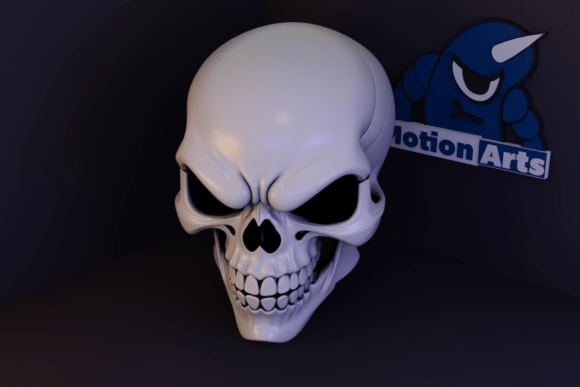
The "striking expression" mentioned in the design specifications refers to exaggerated features, such as widened eye sockets or pronounced teeth, which contribute to a dramatic look even before any post-processing occurs. This approach allows the object to function effectively as a standalone decorative piece. The geometry is optimized to minimize overhangs where possible, though some support material remains necessary for悬垂 sections like the jaw or nasal cavity. This optimization makes the file versatile enough to handle the distinct requirements of both Fused Deposition Modeling (FDM) and Stereolithography (SLA/Resin) printers.
Reasons to Pursue This Specific Design
There are several practical reasons why an individual might select this particular Skull 3D Model for Printing over other available options. For beginners entering the world of 3D printing, the primary draw is the combination of high visual reward with manageable difficulty. Many introductory projects fail because they are either too simple to be satisfying or too complex to print successfully. This model occupies a "sweet spot," offering a recognizable and impressive form that does not require advanced slicing skills or expensive equipment.
Furthermore, the versatility of the design makes it suitable for a wide array of contexts. It is not limited to a single use case. Creators often utilize this model for:
- Halloween Decorations: The stylized expression fits perfectly within spooky or gothic themes.
- Collectibles: Its clean lines make it an attractive shelf piece for enthusiasts of macabre art.
- Set Design: Film and theater productions often need durable props that can withstand handling; the reinforced structure of this model supports such needs.
- Themed Gifts: Personalized items for friends or colleagues who appreciate unique aesthetics.
The ability to achieve a striking appearance without mandatory painting is another significant factor. While paint can enhance details, many users prefer the raw texture of the printed material, especially when using high-quality resins or premium filaments like PETG or ASA. The model's emphasis on good detail in the eye sockets and teeth ensures that shadows and highlights naturally define the features, reducing the workload for post-processing.
Evaluating Benefits and Tradeoffs
When assessing a Skull 3D Model for Printing, it is crucial to weigh the advantages against the inherent tradeoffs of the technology. The most notable benefit is the stability during the printing process. Because the file is designed with printing mechanics in mind, the likelihood of warping, layer shifting, or failed prints is reduced compared to more intricate, unoptimized anatomical scans. This reliability is particularly valuable for those new to the hobby, as it builds confidence and reduces material waste.
However, there are considerations regarding support structures. Despite optimizations, the prompt notes that support is required. This means the user must allocate time for removing supports after the print is complete. On FDM printers, this involves carefully clipping away plastic struts, which can leave small marks on the surface. On resin printers, it requires washing and curing, followed by sanding down the attachment points. Users must decide if they have the patience and tools to perform this cleanup effectively.
Another tradeoff involves the level of realism. Because the design is stylized, it sacrifices medical or forensic accuracy for artistic effect. If a user's goal is to create a scientifically accurate replica for educational purposes, this model may not be the best fit. The exaggerated features, while visually striking, do not represent the true proportions of a human or animal skull. Therefore, the choice depends heavily on whether the end goal is decoration or education.
Ideal Scenarios for Implementation
This Skull 3D Model for Printing is a strong fit for specific situations where visual impact and ease of production are prioritized. It is particularly effective for first-time users who want to demonstrate the capabilities of their printer to others. The resulting object is large enough to be noticeable but small enough to print within a reasonable timeframe, typically ranging from a few hours to half a day depending on the printer speed and resolution settings.
It also aligns well with projects requiring durability. For instance, if the skull is intended to be handled frequently, such as a prop in a live performance or a tactile toy, the thickened walls and simplified geometry prevent breakage. Additionally, the model works exceptionally well in environments where lighting plays a role. Placing the printed skull in a shadow box or under directional lighting accentuates the deep eye sockets and defined teeth, creating a dramatic atmosphere with minimal effort.
For makers interested in learning about orientation and support placement, this model serves as an excellent teaching tool. It presents clear challenges—such as how to orient the head to minimize supports on the face—that help users develop critical problem-solving skills without the risk of catastrophic failure associated with more delicate models.
When Alternatives May Be Preferable
Despite its strengths, there are scenarios where alternative models or approaches should be considered. If the project demands photorealism or precise measurements, a high-resolution scan of an actual specimen would be superior. The stylization inherent in this model smooths over fine textures and irregularities that are characteristic of real bone. Similarly, if the user has no interest in post-processing and desires a "print-and-play" experience with zero cleanup, a model specifically designed to be self-supporting or one that prints entirely on its base might be a better choice, although such designs often compromise on aesthetic quality.
Furthermore, users with very low-end printers that struggle with bridging or overhangs might find the requirement for supports frustrating. In such cases, simpler geometric shapes or models explicitly labeled as "no-support needed" could yield better results. Finally, if the intended application is purely functional rather than decorative, such as a component for a mechanical assembly, the organic curves of a skull are likely unnecessary and inefficient.
Practical Decision-Making Insights
To determine if this Skull 3D Model for Printing aligns with your goals, consider your current skill level, equipment capabilities, and desired outcome. Ask yourself if you are comfortable removing support material and performing light sanding. If the answer is yes, and you seek a project that yields a high-impact visual result with a moderate learning curve, this model is a logical choice. It bridges the gap between beginner simplicity and intermediate complexity.
Additionally, evaluate your printer type. If you use an FDM printer, ensure you have a nozzle size capable of capturing the tooth and socket details, typically 0.4mm or smaller. For resin users, check the build volume to ensure the model fits comfortably. Ultimately, the decision rests on balancing the desire for a striking, stylized aesthetic with the willingness to engage in the standard workflow of 3D printing, including slicing, printing, and finishing. By understanding these factors, you can confidently select a model that enhances your creative output without exceeding your technical resources.